

Why Does My Back Hurt When I Sit but Feel Better When I Stand?
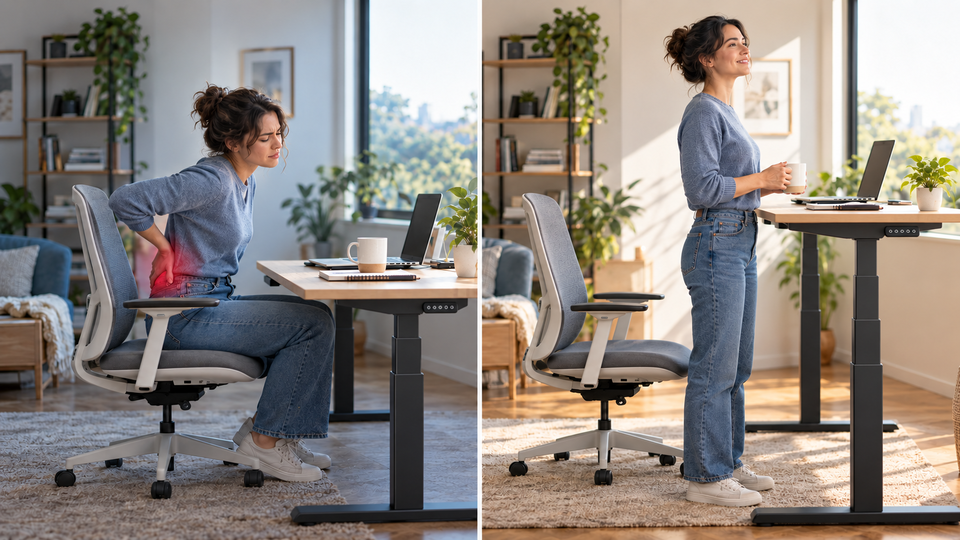
You sit down at your desk to start working, and within 20 or 30 minutes, your lower back begins to ache. You shift in your chair, straighten your posture, or lean to one side, hoping to find a comfortable position. Eventually, you stand up, walk around for a few minutes, and notice that your back feels better. Sound familiar?
This is a common complaint I hear from patients at The Center for Total Back Care in Mesa, Arizona. Many people assume that sitting-related back pain is simply a posture problem or the result of tight muscles. Sometimes that is part of the explanation, but there may be other factors.
When your back hurts while sitting but feels better when standing, the important question is not simply how to relieve the pain. It is why sitting is aggravating your back in the first place.
Understanding that difference can help you choose the right treatment and reduce the likelihood of recurring episodes.
Why Sitting Can Aggravate Your Lower Back
Your spine is designed to provide stability while allowing movement. It contains vertebrae, intervertebral discs, facet joints, ligaments, nerves, and muscles that work together to support your body.
When you change positions, the forces acting on these structures change. Sitting is not inherently harmful to your spine. However, prolonged sitting can become uncomfortable when your back is already sensitive or when you remain in one position for too long.
Three factors are particularly important.
1. Sitting Changes the Forces Acting on Your Spinal Discs
Your intervertebral discs sit between the vertebrae and help distribute forces throughout your spine. Each disc contains a soft, gel-like center called the nucleus pulposus and a strong outer ring called the annulus fibrosus.
When you sit, particularly when you slouch or bend forward, your lumbar spine moves into a more flexed position. This changes how forces are distributed through your discs and other spinal structures. If a disc is already irritated or injured, certain sitting positions may aggravate your symptoms.
For some people, standing restores a more comfortable spinal position and reduces their pain. However, sitting does not always create more disc pressure than standing. The amount and distribution of pressure depend on your posture, muscle activity, support, and the specific task you are performing. The important clinical finding is whether your symptoms consistently change with different positions.
2. Your Back Muscles Must Maintain Your Position
Your spinal muscles help support your trunk whether you are sitting, standing, or moving. During prolonged sitting, some muscles maintain low-level activity while others may become relatively inactive. If you remain in one position for an extended period, you may develop discomfort from sustained loading and a lack of movement. This can be particularly noticeable when your spinal muscles have limited endurance.
Standing up and walking allow your muscles to change their activity and redistribute the forces acting on your back. That is one reason a short movement break can make such a noticeable difference.
3. Prolonged Sitting Reduces Movement
Your spine benefits from regular, comfortable movement. When you sit for several hours without changing positions, your back remains exposed to relatively similar mechanical demands. This may contribute to stiffness and discomfort, particularly if your back is already sensitive.
Standing and walking introduce movement into your spine and hips. They also change muscle activity and loading patterns. The problem is not necessarily sitting itself. It may be the amount of time you spend sitting without changing positions.
5 Possible Causes of Back Pain When Sitting
Several conditions can produce similar symptoms. Although your pain pattern provides useful information, it does not establish a diagnosis by itself. Here are five possible explanations.
1. Disc-Related Lower Back Pain
Disc-related pain is one possible explanation when sitting consistently aggravates your symptoms. Your lumbar discs help absorb and distribute forces between the vertebrae. When a disc becomes painful, certain movements and positions can increase symptoms.
You may notice:
- Pain that increases during prolonged sitting.
- Discomfort when bending forward.
- Pain when getting out of a chair.
- Relief when standing or walking.
- Symptoms that increase while driving.
Some people also experience pain that travels into the buttock or leg. A herniated disc can irritate a nearby nerve, although many disc herniations do not cause symptoms.
It is also important to understand that degenerative changes on an MRI are common, even in people who have no back pain. An MRI finding must be interpreted alongside your symptoms and examination.
A painful disc is one possible cause of sitting-related back pain, but the sitting pattern alone does not prove that a disc is responsible.
2. Muscular Pain and Reduced Endurance
Your lower back muscles work together to maintain posture and control movement.
If these muscles become painful, fatigued, or deconditioned, maintaining a sitting position may become uncomfortable.
You might experience:
- A dull ache across your lower back.
- Tightness after sitting for extended periods.
- Discomfort that improves when you move.
- Pain after a long workday.
- Difficulty maintaining a comfortable sitting position.
Reduced muscular endurance can also make prolonged sitting more demanding.
However, the sensation of muscle tightness does not necessarily mean that a muscle is physically shortened or that stretching alone will resolve the problem.
Treatment depends on the underlying findings. Some patients benefit from mobility exercises, while others need a progressive strengthening program. Many need a combination of both.
3. Lumbar Disc Degeneration
Degenerative disc disease refers to structural changes that occur in spinal discs over time. These changes may include reduced disc hydration, loss of disc height, and alterations in the disc's internal structure.
Disc degeneration becomes increasingly common with age. For some people, these changes contribute to lower back pain. For others, they cause no symptoms at all.
When a degenerative disc is painful, prolonged sitting or bending may aggravate the area. Standing or walking may feel more comfortable. However, degenerative changes do not automatically mean that your spine is unstable or that your back will continue to deteriorate.
A comprehensive evaluation helps determine whether the changes are clinically relevant.
4. Sacroiliac Joint or Other Mechanical Pain
Your sacroiliac joints connect your sacrum to your pelvis. These joints help transfer forces between your spine and lower extremities.
In some patients, sacroiliac joint pain becomes more noticeable during prolonged sitting or when changing positions. The discomfort may be concentrated on one side of the lower back, near the buttock. You might notice pain when getting out of a car or rising from a chair.
Other structures, including muscles, ligaments, and lumbar joints, can produce overlapping symptoms. Because these conditions can feel similar, examination findings are important when identifying the likely pain source.
5. Nerve Irritation or Sciatica
If sitting produces pain that travels from your lower back into your buttock or leg, nerve irritation may be involved. Sciatica describes symptoms associated with irritation or injury of the sciatic nerve or the nerve roots that contribute to it.
Possible symptoms include:
- Pain traveling into the buttock or leg.
- Burning or electric-like sensations.
- Tingling or numbness.
- Symptoms that increase with prolonged sitting.
- Weakness in the affected leg.
A lumbar disc herniation is one possible cause. However, sciatic-type symptoms can also arise from other conditions. For example, irritation of the sciatic nerve in the deep gluteal region can sometimes make sitting uncomfortable. The location of your symptoms, neurological findings, and response to movement help determine what is happening. Persistent or progressive neurological symptoms warrant medical evaluation.
What Does It Mean If Standing Immediately Relieves My Back Pain?
One of the most useful pieces of information during a spinal evaluation is how symptoms respond to different positions. If sitting consistently increases your pain and standing relieves it, that pattern suggests your symptoms are influenced by mechanical loading or position.
Clinicians sometimes refer to this as a directional or positional response. However, standing relief does not establish a specific diagnosis. For example, someone with disc-related pain may feel better when standing because the change in spinal position reduces irritation. Another person may experience relief because standing allows fatigued muscles to change their activity. Someone else may improve simply because they are no longer maintaining the same position.
The timing of your symptoms can provide additional information.
Consider these questions:
- Does the pain begin immediately when you sit?
- Does it develop after 20 or 30 minutes?
- Does leaning forward make it worse?
- Does sitting with lumbar support help?
- Does walking provide more relief than standing still?
- Does the pain travel into your buttock or leg?
These details help guide your examination. They can also help determine which movements or activities may be appropriate during rehabilitation.
Why Your Back May Hurt When You First Stand Up
Some people experience a slightly different pattern. They feel relatively comfortable while sitting, but their lower back becomes painful or stiff when they first get out of a chair. After walking for a few minutes, the discomfort improves.
This is sometimes called start-up pain. It may be associated with several conditions, including mechanical lower back pain, joint irritation, and muscular stiffness.
Prolonged sitting can also make the transition to standing uncomfortable when your back is already sensitive. In some patients, reduced hip mobility or difficulty coordinating trunk and hip movement contributes to the problem. If you experience this pattern regularly, it is worth evaluating rather than assuming it is simply a normal consequence of aging.
The Hidden Role of the Multifidus Muscle
One aspect of recurring lower back pain that is frequently overlooked is the function of the deep spinal stabilizing muscles. The multifidus is particularly important.
This muscle runs along the spine and helps control movement between individual vertebrae. Unlike larger muscles that produce substantial trunk movement, the multifidus contributes to segmental spinal control and stability. It works with other trunk muscles to support your spine during everyday activities.
What Happens to the Multifidus After a Back Injury?
Research has demonstrated that lower back pain and spinal injury can be associated with changes in multifidus muscle size, activation, and composition.
One mechanism that may contribute is arthrogenic muscle inhibition. This occurs when altered sensory input associated with joint injury or irritation interferes with normal muscle activation. In many patients, the multifidus becomes less effective at performing its stabilizing function. Over time, reduced muscle use and other factors may contribute to atrophy and fatty infiltration. However, these changes are not present in every patient, and their relationship to pain varies.
Why This Matters for Recurring Back Pain
Your back may feel better after rest, treatment, or a reduction in inflammation. But pain relief does not necessarily mean that your spinal muscles have regained their previous strength and endurance. If significant muscle dysfunction remains, you may continue to have difficulty tolerating certain activities. That can include prolonged sitting, lifting, or returning to exercise. This is why I believe rehabilitation deserves attention even after the most noticeable symptoms have improved.
At The Center for Total Back Care, we use MedX spinal strength testing and rehabilitation when clinically appropriate to assess and address spinal muscle performance. The objective is to identify measurable limitations and develop a progressive strengthening program. Pain relief is important, but restoring spinal strength, endurance, and function is also an important part of rehabilitation.
It is worth emphasizing that multifidus dysfunction cannot be diagnosed simply because sitting causes pain. It requires an appropriate clinical assessment, and MedX strength testing measures spinal performance.
6 Things You Can Do to Reduce Back Pain While Sitting
If sitting aggravates your lower back, several practical changes may help.
The goal is not to find one perfect sitting position. It is to reduce unnecessary irritation, maintain comfortable movement, and gradually improve your tolerance for everyday activities.
1. Take Regular Movement Breaks
One of the simplest strategies is to avoid sitting continuously for long periods.
Try standing or walking for a few minutes approximately every 30 minutes. You may need more frequent breaks if your symptoms begin sooner. A short walk around your office or home may be enough to make sitting more comfortable. There is no universally correct interval. Use your symptoms and activity demands to guide the frequency.
2. Use Appropriate Lumbar Support
A chair that supports your lower back may help reduce discomfort. Try positioning a small lumbar cushion or rolled towel behind your lower back. Your goal is to maintain a comfortable position rather than forcing your spine into an exaggerated arch. Adjust the support until it feels natural. If lumbar support increases your symptoms, discontinue it.
3. Adjust Your Workstation
Your workstation should allow you to change positions without unnecessary strain.
Consider the following adjustments:
- Keep your feet comfortably supported.
- Position your keyboard where your shoulders can remain relaxed.
- Keep your monitor at a comfortable viewing height.
- Avoid repeatedly leaning forward to see your screen.
- Adjust your chair so your hips and knees are comfortably positioned.
A sit-stand desk can be useful because it makes changing positions easier.
However, standing continuously is not necessarily better than sitting continuously.
The objective is to alternate positions throughout the day.
4. Try Gentle Walking
Walking is often a useful activity for people with mechanical lower back pain. It encourages movement and provides an opportunity to change the demands placed on your spine. Start with a comfortable duration. For some people, that may be five minutes. Others may tolerate a longer walk. Gradually increase your activity as your symptoms allow. If walking increases your pain or produces worsening leg symptoms, stop and seek appropriate guidance.
5. Perform Exercises That Match Your Condition
Exercise can help improve spinal strength, mobility, endurance, and function. However, not every exercise is appropriate for every type of back pain. For example, some people with flexion-sensitive lower back pain may respond favorably to certain extension-based movements. Others may find extension uncomfortable. Similarly, stretching may help some patients but aggravate others. Your exercise program should reflect your diagnosis, symptoms, and physical capabilities. Avoid repeatedly forcing movements that produce increasing pain, numbness, or radiating leg symptoms.
6. Improve Your Spinal Strength and Endurance
If your back becomes uncomfortable during everyday activities, reduced muscular capacity may be one contributing factor. A progressive strengthening program can help improve your ability to tolerate physical demands. This may include exercises targeting your trunk, hips, and spinal extensor muscles. In selected patients, specific lumbar extension rehabilitation can be useful.
At our clinic, MedX equipment allows us to assess lumbar extension strength and provide controlled resistance training. The equipment uses pelvic stabilization to help limit unwanted pelvic movement and emphasize lumbar extension. This approach can be particularly useful when measurable spinal extensor weakness is present. The specific rehabilitation program depends on the patient's examination and tolerance.
When Should You Be Concerned About Back Pain While Sitting?
Most episodes of lower back pain are not caused by a dangerous condition. However, certain symptoms require prompt medical attention.
Seek emergency medical evaluation if you develop new bladder or bowel dysfunction, loss of sensation around the groin or saddle region, or rapidly progressive leg weakness. These can be signs of serious neurological compression.
You should also seek prompt medical assessment if your back pain is associated with significant trauma, fever, a history of cancer, unexplained weight loss, or other concerning symptoms.
For back pain without these warning signs, consider scheduling an evaluation when:
- Pain persists or repeatedly returns.
- Sitting interferes with your ability to work.
- You experience pain that travels into your leg.
- You develop persistent numbness or weakness.
- Your symptoms are becoming progressively worse.
- You have difficulty returning to your normal activities.
The sooner you understand the cause of your symptoms, the easier it is to establish an appropriate management plan.
How We Evaluate Sitting-Related Back Pain at The Center for Total Back Care
After more than 40 years treating patients with spinal conditions, one principle continues to guide my approach. The right diagnosis is the most important step toward the right treatment.
When someone visits our Mesa clinic because sitting aggravates their back, we begin by understanding their symptoms. We want to know when the pain started, what makes it worse, what makes it better, and how it affects their daily activities. We also review any relevant injuries, previous treatments, and imaging studies.
Step 1: A Comprehensive History and Examination
Your examination may include an assessment of spinal movement, neurological function, muscle performance, and other relevant findings. We look for patterns that help distinguish between possible causes. For example, back pain associated with a disc problem may behave differently from pain related to a hip condition or a nerve disorder.
The goal is to identify the most likely source of your symptoms and determine whether additional medical evaluation or imaging is indicated.
Step 2: Evaluate Spinal Function
When appropriate, we assess the strength and performance of your spinal muscles. Our MedX lumbar and cervical equipment allows us to perform specialized strength testing. This can help identify measurable weakness and provide a baseline for rehabilitation. It also allows us to track changes in strength as treatment progresses. Strength testing is one part of the overall evaluation, not a substitute for diagnosing the underlying condition.
Step 3: Develop an Individualized Treatment Plan
Treatment depends on your examination findings.
Depending on your condition, your plan may include chiropractic care, therapeutic exercise, physiotherapy, or progressive spinal rehabilitation.
For selected patients with appropriate disc-related conditions, VAX-D spinal decompression may be considered as part of a conservative treatment plan. Decompression is not necessary or appropriate for everyone, and its benefits vary by condition and patient.
Our goal is to choose treatment based on your diagnosis rather than apply the same approach to every person with lower back pain.
Step 4: Address the Factors Contributing to Recurring Pain
Once your symptoms improve, we also consider the physical limitations that may contribute to future episodes. These may include reduced strength, limited endurance, movement intolerance, or difficulty returning to normal activities. A progressive rehabilitation program can help address these limitations. The objective is to help you return to your usual activities with greater physical capacity and confidence.
The Bottom Line: Your Sitting-Related Back Pain Is Telling You Something
If your lower back hurts when you sit but feels better when you stand, there is a reason your symptoms respond to those positions. It may involve a sensitive spinal disc, muscular loading, nerve irritation, or another mechanical condition. The challenge is determining which factors are relevant to you.
Changing your chair, taking movement breaks, and performing appropriate exercises may help relieve your symptoms. However, if the pain keeps returning, temporary relief may not be enough.
A comprehensive evaluation can help identify the underlying problem and determine whether you would benefit from a more specific treatment and rehabilitation program.
At The Center for Total Back Care, we help patients from Mesa, Chandler, Gilbert, and Tempe understand their spinal conditions and develop individualized treatment plans.
Schedule Your Evaluation at totalback.com.
FREQUENTLY ASKED QUESTIONS
1. Why does my lower back hurt when I sit but not when I stand?
Sitting changes the position and loading of your lower back. If a disc, muscle, joint, or nerve is sensitive, prolonged sitting may aggravate it. Standing changes those mechanical demands and may provide relief. The pattern is useful, but a physical examination is needed to help identify the cause.
2. Is back pain when sitting a sign of a herniated disc?
It can be, but not necessarily. A herniated disc may cause pain that increases with sitting or bending forward. However, muscular pain, joint irritation, and other conditions can produce similar symptoms. A herniated disc is more concerning when associated with persistent radiating leg pain, numbness, or weakness.
3. Why does my back hurt more when I sit on a soft couch?
Soft couches often allow your pelvis to tilt backward and your lower back to move into a flexed position. This may aggravate certain types of back pain. A firmer chair with appropriate lumbar support may be more comfortable, although individual responses vary.
4. Is standing better than sitting for lower back pain?
Standing may be more comfortable if sitting aggravates your symptoms, but standing for long periods can also cause discomfort. Alternating between sitting, standing, and walking is generally more practical than maintaining any single position throughout the day.
5. Can weak back muscles cause pain when sitting?
Reduced spinal muscle strength or endurance may contribute to difficulty tolerating prolonged sitting. However, weakness is not always the cause of pain. A clinical examination and, when appropriate, strength testing can help identify whether muscle performance should be addressed during rehabilitation.
6. Why does my back hurt when I get up from a chair?
Pain when rising from a chair can be associated with mechanical lower back pain, joint irritation, muscular stiffness, or other conditions. The transition from sitting to standing changes the demands on your spine and hips. Recurrent or worsening symptoms deserve evaluation.
7. Should I stretch my lower back if sitting causes pain?
Stretching may help some people, but it is not appropriate for every condition. If bending forward increases your symptoms, certain lower back stretches may aggravate the problem. Choose exercises based on your symptoms and clinical findings rather than assuming that all back pain is caused by tight muscles.
8. How long should I sit if I have lower back pain?
There is no universal time limit. A practical starting point is to stand or walk for a few minutes approximately every 30 minutes. If your symptoms begin sooner, take more frequent breaks. Gradually increase your sitting tolerance as your condition improves.
9. Can sciatica cause pain when sitting?
Yes. Some people with sciatica experience increased symptoms during prolonged sitting. Depending on the cause, sitting may aggravate an irritated lumbar nerve root or the sciatic nerve. Pain extending into the leg, especially with numbness or weakness, should be evaluated.
10. When should I see a chiropractor for back pain from sitting?
Consider an evaluation if sitting-related back pain persists, repeatedly returns, interferes with work, or limits your normal activities. A comprehensive examination can help identify the likely cause and determine whether chiropractic treatment, rehabilitation, medical referral, or additional testing is appropriate.