
Pain after a car accident does not always begin immediately. Neck pain, back pain, headaches, stiffness, and other symptoms may appear several hours or even days after the collision.
At The Center for Total Back Care in Mesa, Arizona, we evaluate and treat neck and back injuries caused by motor vehicle accidents. That includes whiplash, delayed neck or back pain, muscle stiffness and spasms, headaches related to neck injuries, disc injuries, numbness or tingling, ongoing spinal pain, and weakness or deconditioning after an accident.
If you need a car accident chiropractor after a Mesa crash, we start with a clear evaluation, then treatment and rehabilitation matched to what was injured.
Dr. B. Jeffrey Jolley, D.C., D.A.C.N.B. has treated spinal conditions in Mesa and the East Valley for more than 40 years.
Our approach goes beyond temporarily reducing pain. We work to identify what was injured, restore comfortable movement, and rebuild the strength and physical capacity needed to return to normal activities.
Depending on your examination findings, treatment may include chiropractic care, physiotherapy, therapeutic exercise, dry needling, myofascial treatment, MedX spinal strength testing and rehabilitation, or VAX-D decompression when a disc problem is involved.
We also help patients understand the clinical and insurance documentation involved in an auto accident claim.
Were you recently involved in a car accident?
Call (480) 633-8293. Free consultation available.
Why Pain Can Be Delayed After a Car Accident
Immediately after a collision, attention often goes to the most urgent questions. Is anyone seriously injured? Is the car drivable? Do I need to go to the emergency room?
During this time, adrenaline and the body’s natural stress response may temporarily reduce your awareness of pain. As that response begins to settle, symptoms may become more noticeable. These can include neck pain, upper or lower back pain, headaches, shoulder pain, pain between the shoulder blades, muscle stiffness or spasms, dizziness, numbness or tingling, and arm or leg pain.
Some symptoms begin immediately. Others may appear later that day, the following morning, or during the first 24 to 72 hours after the collision. For more on timing, see why pain can show up days after a car crash.
The rapid forces of a motor vehicle accident can strain muscles and ligaments, irritate spinal joints, and place stress on discs and nerves. Delayed pain does not mean that no injury occurred. It may simply mean that the symptoms became more apparent after the initial stress response faded.
What Is Whiplash?
Whiplash is a neck injury caused by rapid acceleration and deceleration of the head and neck. It is commonly associated with rear end collisions, but it can occur during many types of motor vehicle accidents.
During the collision, the head and neck may move quickly enough to stress or injure muscles, ligaments, spinal joints, intervertebral discs, nerves, and other soft tissues.
Whiplash symptoms can vary significantly from one patient to another. The amount of pain you feel does not always indicate the extent of the injury.
That is why we evaluate more than just your pain. We also examine movement, joint function, neurological findings, muscle control and stability, strength, and the effect the injury has on your everyday activities.
Care may include chiropractic treatment plus rehabilitation when the neck needs more than restored joint motion alone.
Common Symptoms After a Car Accident
After a collision, people commonly report neck or upper back pain, low back pain, headaches, shoulder pain, pain between the shoulder blades, muscle stiffness or spasms, reduced range of motion, dizziness, numbness or tingling, arm or leg pain, pain while sitting or driving, difficulty sleeping, fatigue, and pain with bending, lifting, or exercising.
Not every symptom comes from the same structure. Neck pain may result from muscle strain, joint irritation, ligament injury, disc stress, or nerve involvement. Low back symptoms may involve muscles, spinal joints, discs, or the nerves that travel into the legs.
A focused evaluation helps determine which tissues and functions have been affected so treatment matches the specific injury.
When to Seek Emergency Care First
Some symptoms require immediate medical attention. Go to an emergency room or urgent care facility if you experience loss of consciousness, a severe or worsening headache, repeated vomiting, confusion, difficulty speaking, new weakness, difficulty walking, chest pain, shortness of breath, severe abdominal pain, loss of bowel or bladder control, numbness in the groin or saddle area, or rapidly progressing weakness in an arm or leg.
These symptoms may indicate a more serious medical condition. Our clinic provides outpatient evaluation, treatment, and rehabilitation after emergency conditions have been ruled out.
How We Evaluate Auto Accident Injuries
An effective treatment plan begins with an accurate evaluation. Your initial visit typically includes a detailed medical history and account of the accident, review of immediate and delayed symptoms, spinal range of motion testing, joint function and functional movement assessment, orthopedic and neurological examination, review of previous X rays or MRI studies when available, and referral for additional imaging or medical care when needed.
We also want to understand how the injury has affected your daily life. Can you turn your head comfortably while driving? Can you sit through a full workday? Can you sleep without waking because of pain? Can you bend, lift, walk, exercise, or perform normal household activities? Can you meet the normal demands of employment?
These functional limitations often help guide rehabilitation just as much as the pain score.
Our Approach to Auto Accident Recovery
There is no single treatment plan that is appropriate for every collision. For most patients, recovery progresses through several stages. Identify the injured tissues and functional limitations. Reduce pain and irritation. Minimize reparative scar tissue formation. Restore comfortable movement. Gradually return to normal daily activity. Identify any remaining weakness or loss of endurance. Rebuild strength and physical capacity. Reduce the likelihood of ongoing or recurring problems.
The goal is not simply to help you feel better for a few days. The goal is to help you recover movement, strength, confidence, and the ability to perform the activities that matter to you.
Chiropractic Care After a Car Accident
Chiropractic care may be used to address spinal joint restriction, stiffness, reduced movement, and pain when appropriate. Techniques are selected based on your diagnosis, age, symptoms, injury severity, tolerance, neurological findings, and stage of recovery.
When neck pain is the primary problem following a collision, whiplash is often involved. Our approach does not treat chiropractic adjustments as the entire recovery plan. When appropriate, chiropractic treatment is combined with physiotherapy and rehabilitation so joint movement, muscle control and stability, strength, endurance, and function are all addressed.
Physiotherapy and Therapeutic Exercise
Physiotherapy and guided therapeutic exercise can play an important role in recovery after an automobile injury. Rehabilitation may address range of motion, mobility, muscle and neurological control, spinal stability, strength, endurance, postural control, balance, functional movement, and return to work, exercise, or sports.
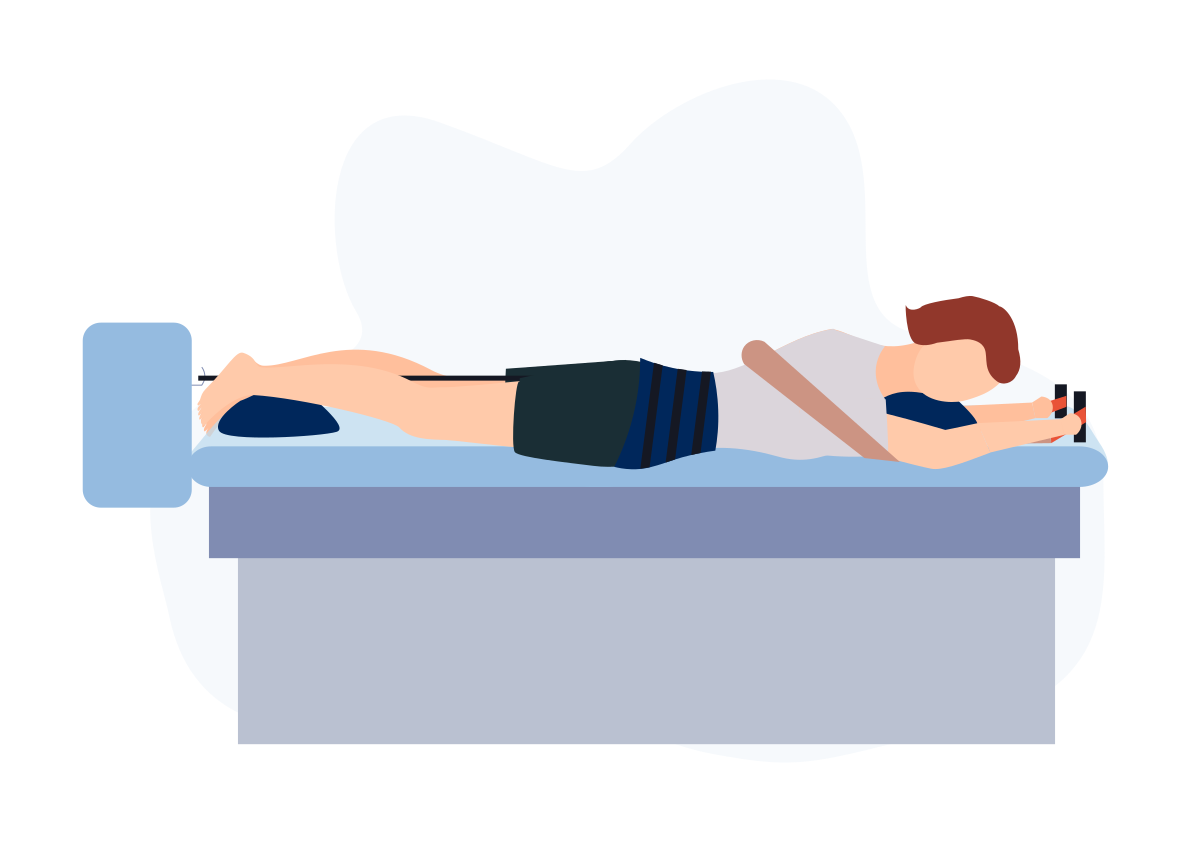
Early rehabilitation may begin with gentle end range movements, mobility exercises, walking, and comfortable movement. As your condition improves, treatment may progress to more specific strengthening, spinal rehabilitation, and activities that prepare you for the physical demands of work, recreation, and everyday life.
Dry needling, myofascial treatment, or other supportive soft tissue procedures may also be used when muscle tension, trigger points, or restricted movement are contributing to your symptoms.
Why Rehabilitation Matters After the Pain Improves
When pain is severe, most people naturally begin moving less. They may stop exercising, avoid lifting, limit driving, and become more cautious with daily movement.
This response is understandable during the early stages of an injury. Prolonged inactivity, however, can lead to altered spinal stability, weakness, reduced endurance, stiffness, and loss of confidence.
Injury can also affect the multifidus, one of the deep muscles that helps stabilize the spine. After an injury, the nervous system may reduce activation of the multifidus, a process known as arthrogenic muscle inhibition (AMI). Over time, this can contribute to weakness, poor spinal control, and even muscle atrophy if normal function is not restored.
You may eventually feel less pain but remain weaker than you were before the accident. Pain relief is not always the same as full recovery.
For most patients, rehabilitation should continue after the most noticeable symptoms have improved. This allows strength, endurance, movement control, spinal stability, and physical capacity to return more completely.
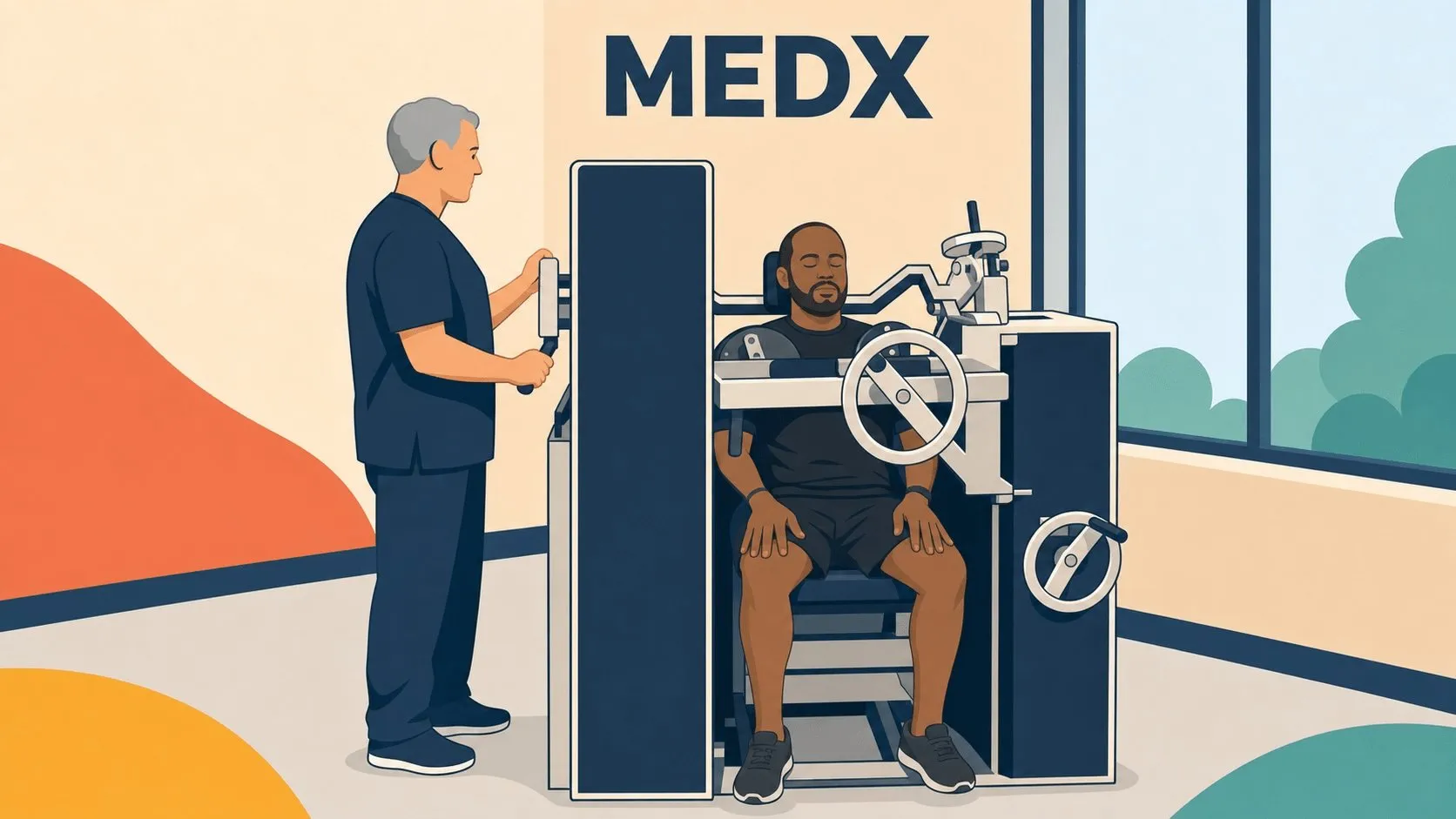
MedX Spinal Strength Testing After a Car Accident
Spinal muscle weakness can be difficult to identify during a standard examination because larger surrounding muscles may compensate for the weaker spinal muscles.
When appropriate, we use MedX spinal strength testing to stabilize the body and more accurately evaluate the lumbar or cervical extensor muscles. Testing can help identify spinal muscle weakness, deconditioning, reduced endurance, strength imbalances, and deficits that may remain after the pain has improved.
For appropriate patients, MedX rehabilitation is then used to rebuild spinal strength, endurance, and spinal stability in a controlled, progressive manner. Retesting provides an objective way to measure improvement.
MedX testing can be particularly useful after whiplash. When neck movement hurts, the cervical muscles may become inhibited and deconditioned. Pain may improve before normal strength returns. See also why MedX matters after a car accident.
The same principle applies to the low back. Weakness may continue to make sitting, standing, bending, lifting, and working more difficult even after the initial pain has decreased. Details are on our MedX spinal testing and rehab page.
Neck Pain After a Car Accident
Neck pain following a collision may include pain while turning the head, neck stiffness, reduced range of motion, headaches, shoulder pain, pain around the shoulder blades, muscle spasms, arm pain, or numbness and tingling. These symptoms may involve muscles, ligaments, spinal joints, discs, or nerves. See our neck pain page for how we evaluate and treat that here.
Back Pain After a Car Accident
Back pain following an automobile accident may include localized low back pain, muscle spasms, pain while sitting, pain with bending or lifting, buttock pain, pain traveling into the leg, numbness or tingling, or sciatic type symptoms. It may result from muscle strain, joint irritation, disc stress, or nerve involvement. More on lower back pain care is here if that is the main complaint.
When examination findings suggest that a disc or nerve may be involved, your symptoms could relate to a herniated disc or a pinched nerve, which may require a more specific treatment approach.
Headaches and Dizziness After a Collision
Headaches and dizziness after a car accident can have several possible causes. Some headaches may relate to cervical muscle tension or irritation of the joints in the neck. Other symptoms may require additional medical evaluation.
Seek prompt medical care for a severe or unusual headache, a rapidly worsening headache, significant dizziness, confusion, vomiting, difficulty speaking, new weakness, loss of balance, other neurological changes, or concerns about a concussion. Persistent dizziness may also relate to our vertigo care when cervical or vestibular findings point that way.
Not every headache after a collision should be assumed to be a simple neck related headache.
Will I Need an X Ray or MRI?
Not every patient requires an X ray or MRI after a car accident. Imaging may be considered when the trauma was significant, a fracture is suspected, neurological deficits are present, symptoms are severe or failing to improve, a disc injury is suspected, or imaging results would change the treatment plan.
We base imaging decisions on your history, examination findings, symptoms, and clinical needs.
Auto Insurance Claims and Clinical Documentation
We regularly care for patients injured in motor vehicle accidents, and we assist with the clinical side of auto injury claims. That may include working with applicable automobile insurance, using MedPay or similar benefits when available, coordinating with health insurance when appropriate, documenting examination findings, recording the diagnosis and treatment plan, documenting functional limitations, tracking clinical progress, and providing appropriate treatment records.
Bring any claim, policy, adjuster, attorney, or insurance information you already have to your first visit. Our team will help explain which billing pathways may apply before you begin a longer course of care.
Details about health plans we work with are available on our accepted insurances page.
If you already have an attorney, we can provide the clinical records and progress updates needed for your case. Our role is to evaluate and treat your injuries and accurately document your care. Questions about legal strategy, fault, liability, or settlement decisions should be discussed with your attorney.
Frequently Asked Questions
Why does my neck hurt the day after a car accident?
Soft tissue irritation, joint stress, inflammation, and muscle spasms may become more noticeable after the initial adrenaline and stress response settle. Delayed symptoms are common following a collision.
Is it normal to feel worse the next day?
Symptoms may become more noticeable during the first 24 to 72 hours. Significant worsening, severe symptoms, or new neurological problems should be evaluated promptly.
Can whiplash cause headaches?
Yes. Some headaches following whiplash may relate to cervical muscles or joints. Severe, unusual, or worsening headaches require medical evaluation.
Can a car accident cause a herniated disc?
A collision can place significant stress on the spine and may contribute to a disc injury in some cases. Imaging may be considered when your symptoms and examination findings suggest disc involvement.
Can chiropractic care help whiplash?
Chiropractic care may help appropriate patients who have pain, stiffness, or joint restriction related to whiplash. Treatment should be individualized and is often more effective when combined with rehabilitation rather than relying on adjustments alone.
How soon should I be evaluated after a car accident?
Seek immediate medical attention when symptoms are severe or neurological problems are present. Even when symptoms are milder, an early evaluation can establish a clinical baseline and identify problems that should be addressed.
Do I need an MRI?
Not necessarily. MRI testing is usually considered when neurological signs are present, symptoms are severe or persistent, a disc injury is suspected, or the results would affect treatment decisions.
Do you handle auto insurance claims?
Yes. We work with patients on the clinical side of automobile accident claims. That may include applicable billing arrangements and documentation of your examination, diagnosis, treatment, and progress. Bring your claim and policy information so our team can review the next steps with you.
Can I begin treatment while my claim is still open?
Yes. Many patients begin treatment while their claim remains active. Let us know how the claim is being handled so treatment, documentation, and billing can be coordinated properly.
Can MedX rehabilitation be used after whiplash?
For appropriate patients, MedX cervical or lumbar testing can identify weakness and help guide targeted spinal rehabilitation following a collision.
Can I exercise after a car accident?
Often yes, but the type, timing, and intensity of exercise should match your condition. Early activity may involve walking and gentle mobility. Later rehabilitation may progress to strengthening and a gradual return to normal activity.
Should I rest after a car accident?
A short period of reduced activity may help when pain is severe. Prolonged inactivity is usually not the goal. Gradual, appropriate movement can help restore mobility, prevent deconditioning, and support recovery.
Auto Accident Care for Mesa and the East Valley
The Center for Total Back Care provides evaluation, treatment, and rehabilitation for patients from Mesa, Chandler, Gilbert, Tempe, and other nearby East Valley communities. Our clinic is at 2220 South Country Club Drive, Suite 102 in Mesa, Arizona 85210.
If you were recently involved in a collision, do not assume that delayed pain means nothing is wrong. The first step is identifying which tissues and functions were affected. The next step is a treatment and rehabilitation plan designed to restore movement, strength, and normal activity.