A herniated disc, sometimes called a slipped disc, can cause sharp pain in your back or neck and may send pain into your arm or leg. It can make sitting, bending, driving, working, or even sleeping difficult.
At The Center for Total Back Care in Mesa, VAX-D spinal decompression is one of the primary treatments we use for appropriate disc cases. Depending on what we find during your examination, treatment may also include chiropractic care, physiotherapy, and MedX spinal testing and rehabilitation.
B. Jeffrey Jolley, D.C., D.A.C.N.B. has been treating disc and spine problems since 1983.

Call (480) 633-8293 or schedule a free consultation. Our office is located at 2220 S. Country Club Dr., Suite 102, Mesa, AZ. We also regularly see patients from Chandler, Gilbert, Tempe, and throughout the East Valley.
How We Treat Herniated Discs in Mesa
One of the first questions people with a herniated disc often ask is whether surgery will be necessary or whether there are conservative treatment options they can try first.
When appropriate, we begin with conservative care.
History and examination
We start with a complete history and examination, including what your pain feels like, where it travels, what makes it better or worse, and whether there are neurological findings that require additional attention.
Imaging review
If you already have an MRI or other imaging, bring it with you. We will review it along with your examination findings. If your symptoms and examination indicate that additional imaging may be appropriate, we may recommend it.
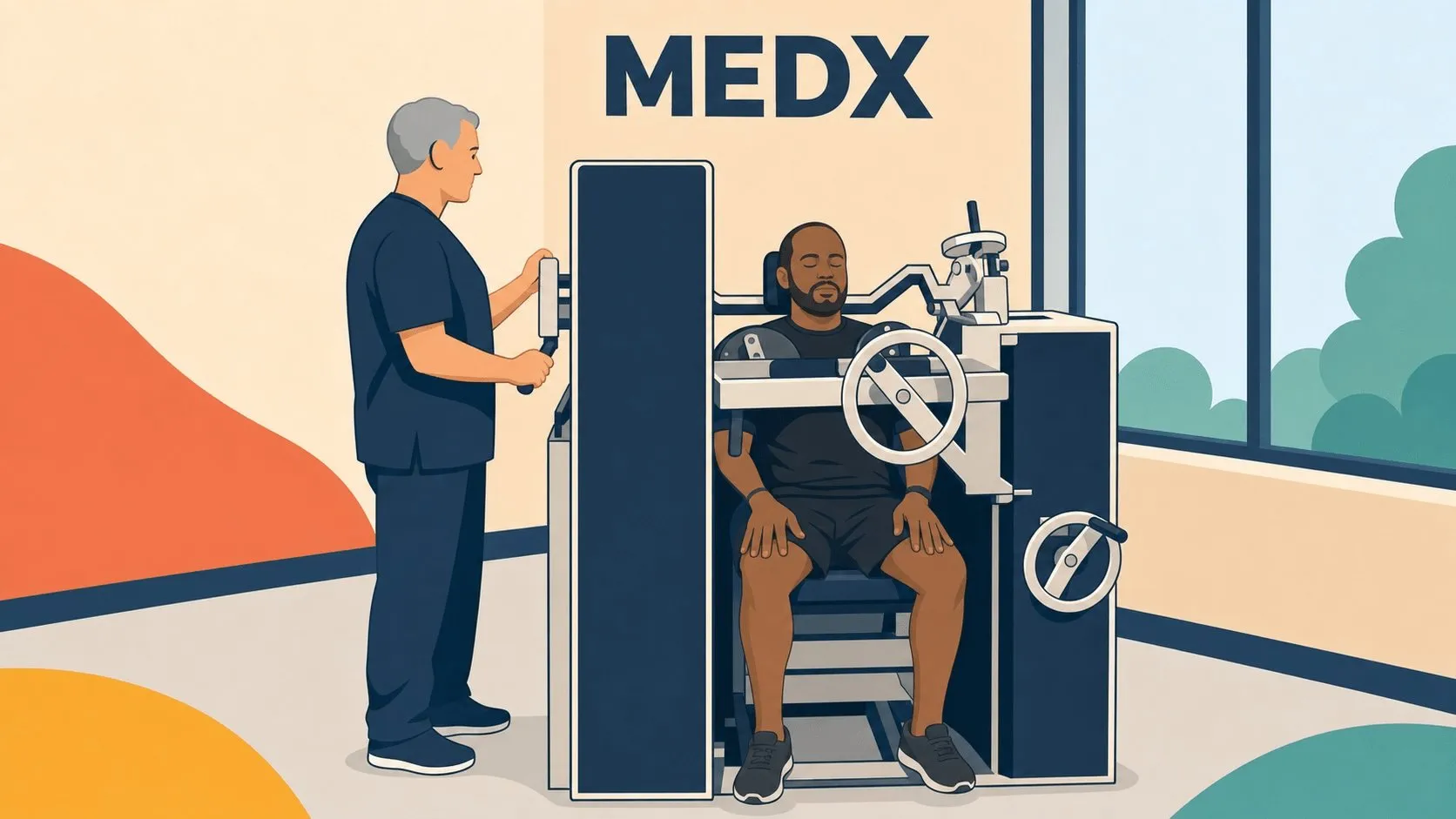
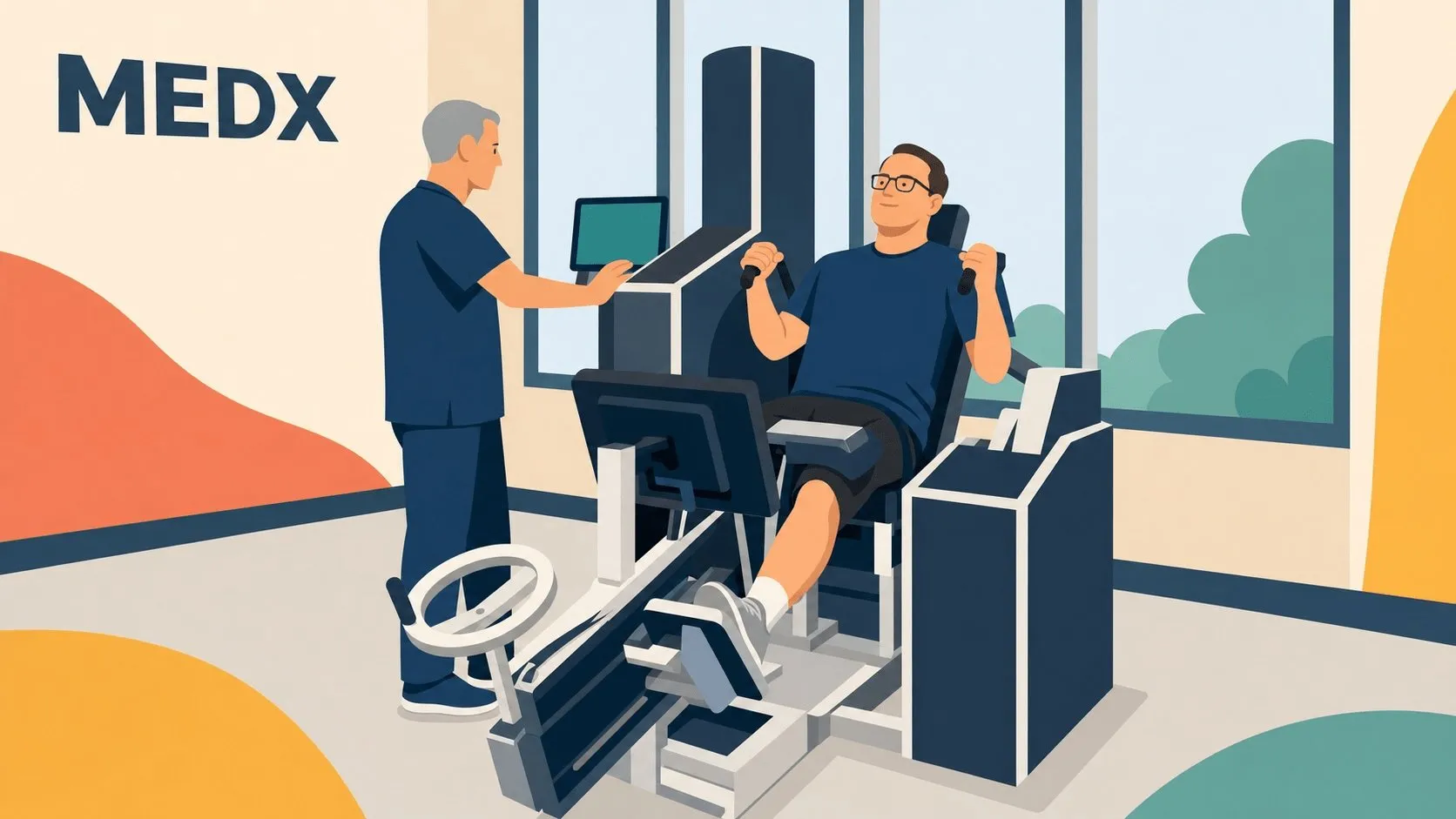
MedX spinal testing and rehabilitation
When weakness of the muscles supporting the spine is part of the problem, objective spinal strength testing can help identify specific deficits.
Instead of guessing which muscles need strengthening, MedX testing allows us to measure spinal function and develop a more targeted rehabilitation program.
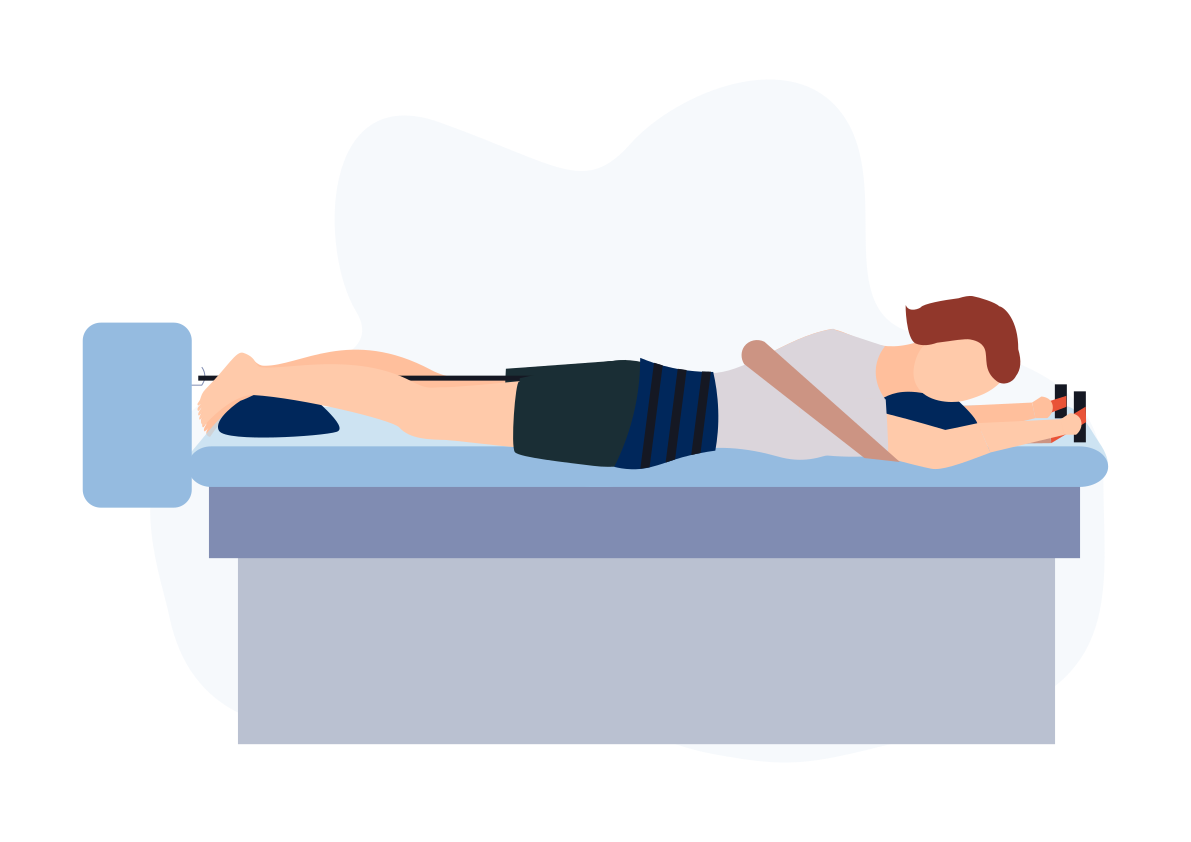
VAX-D spinal decompression
For many disc bulges and herniation cases, VAX-D spinal decompression is an important part of treatment at our clinic.
VAX-D is designed to apply controlled decompressive forces to the spine, reducing mechanical loading on the affected spinal segments. Our goal is to reduce symptoms and improve function while creating an opportunity to rebuild the muscular support surrounding the spine.
Chiropractic care and physiotherapy
Treatment may also include hands-on care, physiotherapy, and guided movement designed to help you return to normal activities such as sitting, driving, working, exercising, and sleeping.
This does not mean everyone with a herniated disc receives the same treatment.
Some patients may benefit from decompression. Others may respond better to rehabilitation, chiropractic care, physiotherapy, or a combination of treatments. Once we've looked at what's going on, we'll walk you through what makes sense for you.
Symptoms We Commonly See
A spinal disc has a softer inner portion surrounded by a tougher outer layer. A disc herniation occurs when disc material becomes displaced beyond its normal boundaries. Depending on its location and severity, it may irritate or compress a nearby nerve.
Lower back or lumbar disc herniation
Pain in the lower back, buttock, thigh, lower leg, or foot. Some patients experience tingling, numbness, or weakness. Symptoms may become worse with sitting, bending, coughing, or sneezing.
Neck or cervical disc herniation
Pain may travel into the upper back, shoulder, arm, or hand and may be accompanied by numbness, tingling, or weakness. Cervical symptoms are also covered on our neck pain treatment page.
Localized spinal pain
Not every disc problem causes pain into an arm or leg. Persistent neck or back pain without radiation may still warrant evaluation if it is not improving.
Some disc herniations appear on MRI without causing significant symptoms, while others can be extremely painful. We go by your symptoms, neurological findings, strength, function, and examination, not just the wording on an MRI report.
Seek Urgent Medical Care If You Have
- Loss of bowel or bladder control
- Progressive weakness in an arm or leg
- Numbness in the saddle area, including the inner thighs or groin
- A sudden or severe neurological change
These can represent serious neurological warning signs and require prompt medical evaluation.
Herniated Disc vs. Bulging Disc
MRI reports sometimes use terms such as "disc bulge," "disc protrusion," or "disc herniation," and these terms can be confusing.
In simple terms, a disc bulge generally involves a broader area of the disc extending beyond its normal boundary. A herniation is more localized and may be described as a protrusion or extrusion, depending on its shape and extent.
Either condition may or may not irritate a nerve.
The important question is not simply what your MRI calls the disc problem. We want to know whether the imaging findings correspond with your symptoms and examination.
If your MRI report describes a disc bulge, you can also read our bulging disc treatment page.
When you come to our office, we base treatment on your symptoms, examination, neurological findings, function, and imaging when appropriate.
Is a Chiropractor a Good Choice for a Herniated Disc?
For most patients, chiropractic care, spinal decompression, and conservative spine rehabilitation are appropriate options for a herniated disc. However, treatment should be based on a thorough examination and tailored to the individual patient.
Our approach is not simply to adjust everything and hope the problem improves.
The Center for Total Back Care has treated disc and spinal conditions since 1983. We added VAX-D spinal decompression and MedX spinal testing and rehabilitation in 1998 so that treatment could address not only pain and mobility, but also spinal strength and function.
If your examination indicates that you would be better served by a pain management or surgical consultation, we will tell you.
Our goal is to help patients recover with conservative treatment when it is appropriate, while recognizing when additional medical evaluation is necessary.
FAQ
What doctor is best for a herniated disc?
Start with a clinician who can evaluate both spinal and neurological function and determine whether conservative treatment is appropriate.
Depending on the severity of the condition, this may include a chiropractic physician experienced in spinal rehabilitation and decompression, a physiatrist, an orthopedic spine specialist, or a neurosurgeon.
Many Mesa-area patients choose to begin with a thorough conservative evaluation before considering injections or surgery, provided there are no neurological or other findings requiring more immediate medical intervention.
Can a herniated disc heal without surgery?
The majority of people with symptomatic disc herniations improve without surgery.
Conservative treatment may include activity modification, rehabilitation, manual treatment, and other therapies based on the patient's condition.
Surgery is more likely to be considered when there is progressive neurological loss, cauda equina syndrome, significant neurological compromise, or persistent disabling symptoms that have not responded adequately to appropriate conservative care.
What is the most effective treatment without surgery?
There is no single treatment that is best for every herniated disc.
Effective conservative care often involves a combination of appropriate activity modification, symptom management, progressive rehabilitation, and treatment directed toward the patient's specific examination findings.
For appropriate cases at our clinic, we may incorporate VAX-D spinal decompression and MedX spinal rehabilitation as part of that treatment plan.
How is this different from just stretching or taking pain medication?
Medication, rest, and stretching may help control symptoms during a flare-up, but symptom relief is only one part of recovery.
Our goal is to restore function. This usually includes improving mobility, rebuilding spinal strength and endurance, and gradually increasing your ability to sit, drive, work, exercise, sleep comfortably, and perform your other normal activities of daily living.
How painful is a herniated disc?
The severity of symptoms varies considerably.
Some people experience a mild ache, while others have severe pain that makes it difficult to sit, walk, work, or sleep.
Pain intensity alone does not determine the treatment plan. We also consider neurological function, how long the symptoms have been present, the examination findings, and whether conservative treatment is appropriate.
If severe pain occurs along with progressive weakness, bowel or bladder changes, or numbness in the saddle area, seek emergency medical attention.
Already Tried Spinal Decompression Somewhere Else?
Many different treatment tables are marketed as "spinal decompression," but they do not all operate in the same way.
At The Center for Total Back Care, we use VAX-D, or Vertebral Axial Decompression, and have offered VAX-D treatment in our clinic since 1998.
VAX-D uses a computer-controlled decompression protocol designed specifically for the lumbar spine. It has also been the subject of published research examining intradiscal pressure and clinical outcomes.
More importantly, decompression at our clinic is rarely just time spent on a machine.
When appropriate, we combine decompression with MedX spinal testing and rehabilitation to address the muscles responsible for supporting and stabilizing the spine.
Reducing symptoms is important. Restoring strength and function is also an important part of long-term recovery.
If you previously received traction or decompression without a comprehensive examination or progressive strengthening program, we may approach your condition differently.
Bring your previous MRI reports, imaging, or treatment records if you have them. We will review your history and examination findings and tell you whether another course of VAX-D treatment is appropriate for your condition.
From Patients We've Helped
A few people with disc problems shared how things went for them. You can read more on our success stories page.
I was diagnosed with a herniated disc. I was told surgery was my only choice. After treatment on the VAX-D I no longer have any back or leg pain. Even the surgeon was impressed.
I had back surgery in 1995 for a disc herniation. Pain in my back and leg returned. They placed me on VAX-D treatment and then strengthened my back with the MedX machine. My back and leg pain are gone. I wish I could have tried this before my first surgery.
After an MRI my doctor told me I had 3 bulging discs in my lumbar spine. I tried the VAX-D and within weeks my pain was gone. I can play tennis for the first time in about five years.
Individual results vary, and a patient's response to treatment depends on the nature and severity of the condition.
Serving Chandler, Gilbert, Tempe, and the East Valley
The Center for Total Back Care is located in Mesa, Arizona, and we regularly treat patients from Chandler, Gilbert, Tempe, and throughout the East Valley who are looking for conservative treatment options for herniated and bulging discs.
If you have been diagnosed with a herniated disc, have an MRI showing a disc problem, or have persistent back, neck, arm, or leg pain that is not improving, the first step is determining what is actually causing your symptoms and whether conservative care is appropriate.
Schedule a free consultation at The Center for Total Back Care. Call (480) 633-8293 or request an appointment.
2220 S. Country Club Dr., Suite 102, Mesa, AZ.