
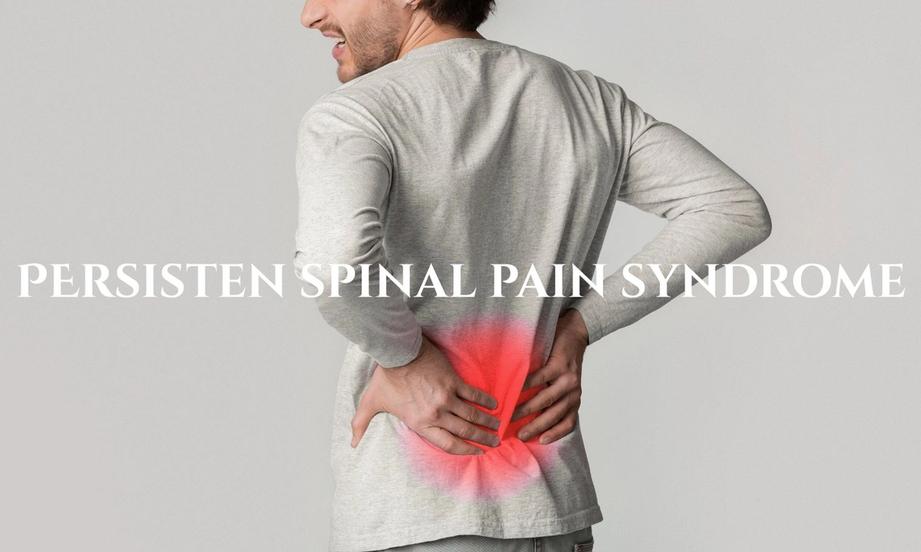
Persistent Spinal Pain Syndrome: Type 1 vs Type 2: Why Your Back Pain Hasn’t Gone Away and What Actually Helps
Patients across Mesa, Chandler, Gilbert, and Tempe often arrive frustrated after months or years of unresolved neck or back pain. Many have tried physical therapy, chiropractic care, injections, or even surgery, yet their pain persists. At this point, they are often told they have “chronic pain.”
A more accurate diagnosis is Persistent Spinal Pain Syndrome (PSPS) — a condition that reflects ongoing spinal dysfunction that has not been fully identified or rehabilitated, rather than a permanent or untreatable condition.
PSPS does not mean the pain is psychological or permanent. It means there is an ongoing spinal pain generator that has not been fully identified or corrected. Understanding the two types of PSPS is critical to choosing the right treatment strategy.
What Is Persistent Spinal Pain Syndrome (PSPS)?
Persistent Spinal Pain Syndrome refers to ongoing spinal pain lasting longer than three to six months, with or without prior spinal surgery. Rather than blaming the patient or labeling the condition as “chronic,” PSPS focuses on why pain persists.
The diagnosis recognizes that spinal pain continues because:
- Structural or mechanical problems remain
- Spinal stability has not been restored
- Nerves remain irritated or sensitized
- Rehabilitation was incomplete or non-specific
- Treatment focused on symptoms rather than function
PSPS is divided into Type 1 and Type 2, which helps guide appropriate care.
Persistent Spinal Pain Syndrome Type 1 (PSPS Type 1)
PSPS Type 1 refers to persistent spinal pain without prior spinal surgery.
What This Means
The pain is ongoing, but no surgical intervention has been performed. In many cases, patients with Type 1 PSPS were treated with:
- Short-term chiropractic care
- Physical therapy focused on passive modalities or non-specific rehabilitation
- Injections
- Pain medications
- Rest or activity modification
While symptoms may have temporarily improved, the underlying biomechanical and functional deficits were never fully corrected.
Common Drivers of PSPS Type 1
- Disc bulges, herniations, or annular tears
- Degenerative disc changes with instability
- Weakness or inhibition of deep spinal stabilizers (such as the multifidus)
- Recurrent nerve irritation
- Poor load tolerance of the spine
Why Pain Persists
Pain continues because the spine has not regained strength, stability, and controlled movement. Imaging may appear “not that bad,” but function is often severely compromised.
Persistent Spinal Pain Syndrome Type 2 (PSPS Type 2)
PSPS Type 2 refers to persistent spinal pain after spinal surgery.
This term replaces the outdated and misleading label “failed back surgery syndrome.”
What This Means
Surgery may have corrected a specific structural issue, such as removing disc material or decompressing a nerve, but surgery does not restore spinal strength, coordination, or endurance.
Many patients are told surgery was “successful” because imaging looks acceptable, yet pain and disability remain.
Common Drivers of PSPS Type 2
- Residual or recurrent nerve irritation
- Segmental instability above or below the surgical level
- Scar tissue affecting nerve mobility
- Significant spinal muscle deconditioning
- Loss of normal movement patterns and load tolerance
Why Pain Persists
After surgery, spinal muscles often shut down further. Without objective, progressive spinal rehabilitation, the spine remains unstable and vulnerable to ongoing pain.
Why Imaging Alone Often Misses PSPS (Both Types)
MRI and X-rays show anatomy, not function and performance.
They do not measure:
- Spinal muscle strength
- Segmental stability
- Endurance capacity
- Functional movement control
This is why patients with both PSPS Type 1 and Type 2 are often told: “Everything looks normal,” while pain and limitations persist.
What Actually Works for Persistent Spinal Pain Syndrome
Effective care must be diagnosis-driven and objective, regardless of PSPS type.
Step 1: Identify the Primary Pain Generator
This includes determining whether pain is driven by:
- Disc loading
- Instability and weakness
- Nerve irritation
- Post-surgical biomechanical changes
- Or a combination
Objective spinal strength and functional testing are essential.
Step 2: Restore Spinal Strength and Stability
Targeted spinal rehabilitation focuses on:
- Activation and strengthening the deep stabilizing muscles
- Controlled spinal loading
- Progressive resistance
- Restoring endurance and coordination
Generic exercise programs are not sufficient for PSPS.
Step 3: Reduce Disc and Nerve Stress
When appropriate, decompression-based therapies can reduce mechanical pressure while rehabilitation restores function.
Step 4: Rebuild Load Tolerance and Confidence
Persistent pain changes how people move. Rehabilitation must safely retrain normal movement patterns and increase tolerance to daily and occupational demands.
Managing Pain Is Not the Same as Treating PSPS
Pain management alone does not resolve:
- Weakness
- Instability
- Poor spinal motor control
- Reduced load capacity
Without restoring function, flare-ups and dependency on passive care often continue.
Persistent Spinal Pain Syndrome should be treated as a rehabilitation problem, not a lifelong pain condition.
Final Thoughts
Whether you have PSPS Type 1 (no surgery) or PSPS Type 2 (post-surgical), persistent spinal pain usually means something important has been missed or left uncorrected.
You are not broken. You are not out of options.
With proper diagnosis and targeted spinal rehabilitation, many patients experience meaningful, lasting improvement.