
Why Fear Stops Movement and How Staying Active Restores Both Body and Mind
Chronic back pain is not just a physical problem. It is a neurological and psychological condition that reshapes how the brain interprets safety, threat, and movement. For many people, the pain becomes so persistent that the brain begins to treat normal motion as dangerous. This is why people with chronic back pain often stop moving even when their spine is not structurally unstable.
This cycle of pain, fear, and inactivity is one of the biggest reasons back pain becomes chronic.
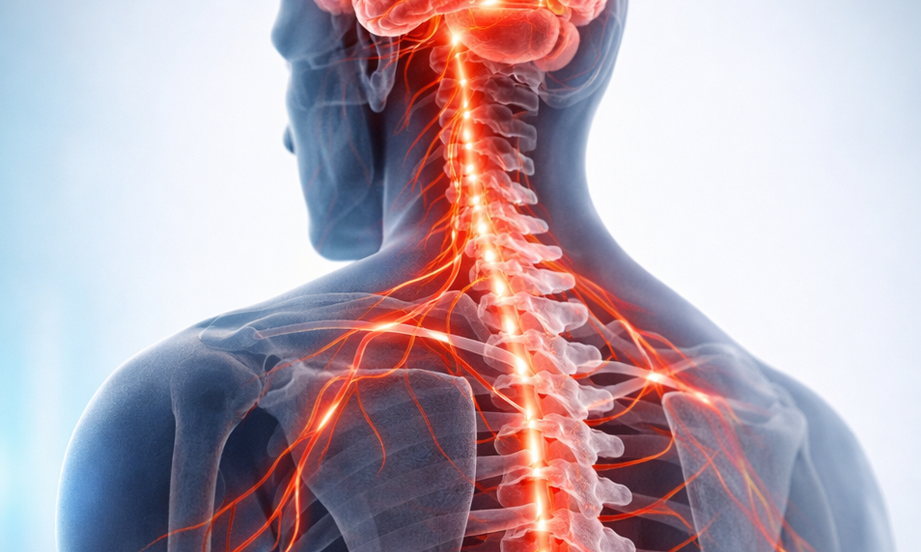
How Chronic Pain Rewires the Brain
When pain lasts more than a few months, it changes how the nervous system works. This is called central sensitization.
Your brain’s alarm system becomes overactive. Movements that once felt normal now feel threatening. The pain becomes less about tissue damage and more about neural danger signals.
Over time:
- The brain becomes hyper-vigilant
- The body stays tense
- Muscles stop coordinating properly
- The pain threshold drops
Even light bending, walking, or sitting can feel unsafe, even when imaging shows no major damage.
The brain has learned: “Movement equals danger.”
This is the core psychological driver behind chronic back pain.
Why People Stop Moving When They Hurt
This process is called fear-avoidance behavior.
Pain → Fear → Avoidance → Weakness → More Pain
The brain links certain movements to pain, so you unconsciously stop:
- Bending
- Twisting
- Walking fast
- Lifting
- Exercising
At first this feels protective. But over time it causes:
- Muscle loss
- Spinal stiffness
- Reduced blood flow
- Loss of stability
- Nervous system hypersensitivity
Ironically, the less you move, the more pain you feel.
Your spine becomes deconditioned, not damaged.
The Emotional Toll of Chronic Back Pain
Chronic pain does not just hurt the back. It changes the mind.
Patients commonly develop:
- Anxiety about movement
- Depression
- Loss of confidence
- Fear of injury
- Social withdrawal
- Catastrophic thinking (“My back is ruined”)
The brain starts to expect pain. And what the brain expects, it amplifies.
This is why people with chronic pain often feel exhausted, irritable, and emotionally drained. Their nervous system is stuck in threat mode.
Why Staying Active Is One of the Most Powerful Treatments
Movement is not just exercise. It is neurological therapy.
When you move:
- Blood flow increases
- Inflammation decreases
- Muscles stabilize the spine
- Nerves calm down
- The brain learns that movement is safe
Each controlled, pain-free movement sends a powerful message to the nervous system:
“This is not dangerous.”
This is how you reverse fear-based pain.
The goal is not to push through pain. The goal is to retrain the nervous system to trust your body again.
Why Strength-Based Spinal Rehab Works
When chronic back pain is driven by fear and deconditioning, random exercise is not enough.
You need:
- Objective testing
- Measurable weakness identification
- Precise spinal loading
- Progressive strengthening
- Neuromuscular retraining
At The Center for Total Back Care, we use MedX medical spinal strength testing to identify exactly which spinal muscles have weakened and how much. This gives us a roadmap to rebuild stability, not just treat symptoms.
When the deep spinal stabilizers regain strength:
- The spine becomes more secure
- The brain feels safer
- Pain decreases
- Confidence returns
This is how people get out of the chronic pain cycle.
Chronic Pain Is Not a Life Sentence
Your pain is real. But it does not mean your spine is broken.
Most chronic back pain is a neuro-muscular conditioning problem, not ongoing injury.
When you restore:
- Strength
- Movement
- Nervous system safety
- Confidence
The pain system shuts down.
The Path Forward
If you have stopped moving because of back pain, it is not weakness. It is your nervous system trying to protect you.
The solution is not rest. The solution is targeted movement, done correctly.
If you are in Mesa, Chandler, Gilbert, or Tempe and dealing with long-term back pain, this is exactly what we do every day.
You do not need to live in fear of your spine.
Visit totalback.com to schedule a comprehensive spinal evaluation and see what your back is truly capable of again.
Your body is stronger than your pain.